Monday, April 24, 2017

Lycee Maba Diakhou Ba Secondary School

Today we visited Lycee Maba Diakhou Ba Secondary School. That is the school where my host teacher, Papa Amadou Seck, teaches. I learned a lot today about their school and their educational system. I learned that teachers in Senegal are paid the same no matter the region they teach in. As long as they have the same educational level (for example, a Masters degree) - they will receive the same pay and housing stipend no matter where they teach. An elementary teacher or middle school or high school teacher all would receive the same pay as well. There was a strike in Nioro a year ago - and teachers were fighting for equal pay. They were on strike for three months. They were fighting for equal pay to other public servants, such as firefighters or police.

In middle school and high school, the students are the ones who stay put in class. The teachers are the ones who travel from class to class.
Because of that, the teachers have a special locked box inside the teacher's lounge where they can store their personal belongings. We were able to meet with the office staff and administration in the morning. I was so happy to talk to the principal - who shared his vision about exchange programs and the value of working together around the world. He stressed the importance that we are all ONE world working TOGETHER.

In Nioro, classes can range from 40 - 90 students. We were in an English as a Foreign Language (EFL) class this morning that had 69 students. Later this week, we will be teaching a science class that has 77 students. Students go to school from October to May. Normally, at the high school level, student classes last 1 hour or 2 hours. Our class today lasted one hour. The EFL class was studying relative clauses. The lesson was given lecture style. When the teacher asked questions, students would snap their fingers and raise their hands in the air to get his attention to be called upon. In some classes, students would snap their fingers, raise their hand and call "Sir, Sir, Sir" to get his attention.

After the lesson, Nan and I were able to share about the education system in the USA and information about California, in particular. We shared about the US flag and it's meaning, in addition to a brief geography lesson about California and the US, in general. We passed around pictures and were happy to answer questions and take photos after the lesson was over.

We took a break to come back to the inn to have lunch, before heading back to the English club this afternoon. We came to Senegal with 100 lbs of gifts to give out - and Nan and I are almost completely out of gifts. I am so thankful to everyone who donated items - it has been wonderful being able to hand out items to teachers, students, administrators, family members and anyone we happen to meet on this journey. We are going to meet with the English Club today after school to share more about California and our students. We are taking post cards to have them read and send a note back to the US with us. The gum/candy we brought seems to be a huge hit - with the teachers and students alike. They love the wristbands, lanyards and luggage tags - in addition to the many shirts, bags and pens.


Sunday, April 23, 2017

Tea and Teranga

Today we went to Papa's house to have some tea and lunch. Nan and I brought gifts to Papa and his wife, in addition to their three girls (ages 4 months, 3 years and 7 years). At first, the children were afraid of me. I am getting this a lot around Nioro. Children seem to point, stare, some will yell "toubab" (which means white woman). Some cling to their mothers, some cry. Papa's daughters had never seen or met a white woman before. I could tell his girls were very scared when they first met me. It honestly took a few hours before they warmed up to me. We started playing catch with some of the balls we brought to break the tension. We also bought them sticker books and coloring books. We had to show the girls how to use the stickers, as they had never seen them before. The candy we brought was a huge hit. We brought Airheads, Ring Pops, Jelly Bellys and Jolly Ranchers. They definitely liked the candy. The girls also liked the little stuffed animals we gave them and USA hats. Papa and his wife went and put on the shirts we gave them immediately.

Papa's wife went to the market before we arrived and purchased two chickens. When she got home, one of the elder boys (Papa's nephew) killed the chickens in order for the women to prepare them. The men always do the killing of the animals, not the women. The women were gathered in the kitchen while one plucked feathers, another chopped onions and yet another prepared the rice. Nan and I sat in the kitchen and watched and would pop outside the kitchen to play with the girls from time to time. The meal was quite the undertaking. It took HOURS for everything to be prepared. Papa said
he loves chicken - it is his favorite meat. However, they only have chicken once a month or every other month. Mostly they have fish. I can see that is is much more difficult to prepare chicken (and time-consuming). While the women prepared the meal, the men talked in another room. I shared pictures of my family with Papa and Ly. An Imam came over to the house and sat with us also.

We talked about marriage and families and desires for the future. Papa said he desires to have more wives, more children and to own his own home. Right now, they are renting a place. He owns a plot of land, but would like to build his own house. Although he only has one wife at this moment, he would like to have 3-4 possibly. He also would like to have a lot of children. His friend, Ly, currently has one wife also but may like to take another wife later. We talked about the "rules" for having more than one wife. He said they are allowed to have up to 4 wives, only if they can treat them equally and provide for them all. More wives also allows for the workload to be lighter because there are so many duties to be done inside the household.

Once the meal was prepared, we ate together from a communal bowl. We all ate with our right hands, and used our left hands to touch the edge of the bowl. Touching the bowl with the left hand is a sign of respect for the food that you are eating. You eat the food by pressing it into a ball shape and putting it into your mouth. We had chicken yassa (or Yassa Poullet) - which is chicken with rice served with an onion/garlic sauce. It was sooooooo good. Definitely a favorite of mine!!! Yassa can be served with fish or other meat (such as the sheep we had yesterday). Although it took hours to prepare, it was very tasty and we enjoyed eating it together.


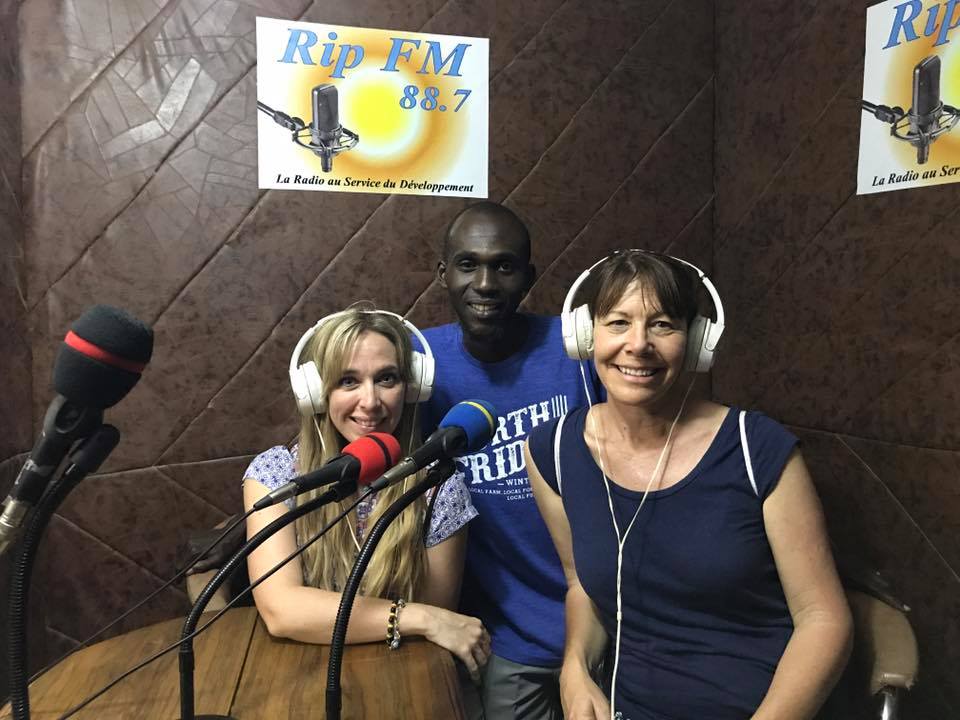
After we ate and had tea, we walked around Nioro. We visited so many places and I learned so many things today. We visited the government buildings. We visited the fire station, the public hospital, the private hospital, the post offices and the radio station.

 I found it particularly interesting that the prices were listed outside the public hospital. It also included dentist services. A consultation for the dentist, for example, cost 500 CFA (which is less than $1 USD). Check out the prices below (approx 600 CFA = $1 currently).

We saw man animals on and around the street. We saw pig, goat, sheep, chicken and donkeys. We saw the first home built in Nioro. We walked around a garden that was growing mint, eggplant, and some other herbs. We also saw the first well in Nioro. It was a very busy place! There were people coming and going the entire time we were there. Nan and I got to draw water from the well. It was very refreshing because it was so warm outside - and I didn't mind the splashing from the sloshing bucket. It was also rather smart of the man who created the garden to place it right next to the well! Good thinking!!! :)


First Day in Nioro Du Rip

We made it to our host community, Nioro Du Rip. Nioro is a small community 4 hours south and east of Dakar. We are staying at a place called CEDAF. I already feel behind in my blogging since I am writing this on Sunday and we arrived yesterday.

On Saturday, we left Dakar at 9:30am and arrived approximately at 1:30pm. Our host teacher, Papa Amadou Seck met us at the hotel and tried to get us settled in. At first, they didn't have a room for one of us - but we got that settled and even have an air cooler in the room in addition to a ceiling fan. Papa is such a nice man! He is energetic, outgoing and very, very kind. He is 33 years old and is married and has three girls (ages 4 months, 3 years and 7 years). He teaches at the high school level in Nioro. He seems to know everyone around town! He has lots of brothers, cousins, etc - that he meets while walking on the street. I love that.
Everyone he meets is a relative or is someone that's considered close enough to be a relative. Everyone stops to say hello and have a chat - no one is in a hurry or a rush like we always are in California.

We left our hotel and took a walk down the road to Gusto. Chez Gusto is a restaurant that is owned by a teacher and his wife. It was closed currently when we were going for lunch - but Simon, the owner opened for us to have some lunch. We had rice and meat, a type of Yassa - but not chicken or pork. We had sheep. We also made sure to find some place that sold water so that we could have it back at the hotel. Bottled water isn't always easy to find here. The local townspeople don't tend to buy bottled water, they drink it from the well or the tap. So, I would imagine the demand for bottled water is very low. We
eventually found water bottles for 500 CFA and took them to the hotel.

It was a very rare occurrence - but there happened to be a wrestling match happening in Nioro the night we arrived. They occur probably once every 3-4 months in Nioro. We happened to be there when they had one. So we were picked up at 6pm to head over to the house of the man who arranged for the match to happen. His name is Sow. Sow actually lived in the USA in New York and is part of the import/export business. He also helps to arrange the wrestling matches. We enjoyed a leisurely visit at his house and even had some "ice cream" - which was bissap flavored or buy (pronounced buoy). The bissap is my favorite. It's made from hibiscus and the buy is made from the fruit of the baobab tree. It was very similar to an Otter Pop - flavored frozen punch, tied in a plastic baggie. You bite/cut the end off and eat it, like an Otter Pop. It was very much welcomed after walking all day in 102-degree weather. It really helped cool us down. It was a very nice treat.

After spending some time there, we went over to the wrestling arena. It was rather dark, but they had a light shining on the arena. There was a good sound system that helped us hear the announcer (who spoke in Wolof) and the singers. Before the matches began - the drummers started drumming on handmade African drums. It was amazing. They are definitely high energy drummers who are extremely talented. Two women also were singers and were also very talented. Before the match, wrestlers would dance and put dirt on their skin. They have two divisions - over 15 kg and under 15 kg. They arranged themselves around the arena in groups. The group may have 1-2 wrestlers from their location/village and have friends and family members with them. The match didn't start until almost 10pm. We were told it could last until 1am. We stayed to watch some matches before returning to the hotel, tired from a long day. It was so much fun to watch the wrestlers, hear the African drums and the singers, too. Papa and his best friend, Ly, were amazing hosts and a lot of fun to be around! We are so grateful for their generosity hospitality.

It was my first night sleeping under the mosquito net. Although I did manage to steal some TP from the hotel in Dakar (so glad I did), I wish I would have packed a towel, and blanket and a dark wrap to use as a curtain. I was able to find a towel at the market in Nioro. I was also very grateful for the air cooler in my room and the bucket of water I had saved in the bathroom - since the water was turned off from the afternoon time until 5am. How do I know 5am? I tried the faucet and apparently didnt return it to the off position - and at 5am I heard water rushing in the sink! :) Note to self - always return the knob on the faucet back to the off position!

Friday, April 21, 2017

Busy Day in Dakar

Today is our last day in Dakar before traveling to our host communities. Our day was busy and filled with trips to the US Embassy, the market and the West African Research Center. I would post pics about the Embassy visit - but we weren't allowed to take any - none outside or inside. HOWEVER, I did end up seeing a high school friend of mine who worked at the Embassy in Dakar (totally random, I know) - and he took a picture that I can share with you later. While at the Embassy we learned about the Ministry of Education in Senegal and some of the challenges they are facing in the Senegalese education system. One of the challenges they are facing is teacher training.
Right now, only approximately 1/3 of the teachers are formally trained. Another challenge is class size. Class size can average anywhere between 40 - 90 students (in some rural areas). Having a class of that size poses a lot of challenges - other than sheer bodies in a classroom. It is difficult for teachers to assess all those students - imagine grading 90 essays!??!? Another area of challenge is making sure the assessment is aligned with the curriculum. They have a national curriculum along with national exams the students have to pass after elementary, middle and high schools. Yet another area of challenge is making classrooms STUDENT-centered vs. TEACHER-centered.

There is currently a debate happening in education right now in Senegal about reading instruction. Right now, students are taught in elementary school to read in French. However, French isn't the mother tongue of most students. There are three predominantly three languages that are the mother tongue of most students: Wolof, Pular, and Sere. However, students are taught to read in French. The argument has been whether students should learn how to read in their MOTHER TONGUE or in the LINGUA FRANCA (which would be French). The problem with students learning how to read in their mother tongue is that there currently aren't any resources (books, etc) in Wolof, Pular, or Sere. Assessments would need to be aligned and materials would have to be created. At least it is opening
the lines of conversation about language acquisition and best practices in teaching reading.

After we left the embassy - we headed to Little Buddha for lunch and had traditional Yassa Poulet. Ohhhh man, it was delicious! It has been my favorite food item so far out here! It is chicken and rice, made with a yummy onion sauce! It was the BEST! Mmmmmm!

After that, our group went on a walk (to walk off some lunch) and took some pictures at an outdoor gym. There are tons of pictures outside on the cliff overlooking the ocean. It's beautiful. At night, there are tons of people working out and using all the free equipment. We had fun with our
two in-country hosts (Ibrahima and Assitou). We also spent some time at the West African Research Center. There aren't public libraries in Senegal. This is an area that has a wide collection of books about West Africa and Senegal that students can come and use in their center. It is a fully functioning library, in addition to a research center. Students can come and use their computers and wifi. There is also a meeting room where conferences and meetings are held.

Tomorrow we leave for our host community - Nioro Du Rip. I am anxious to meet our host teacher and get to see the host community we will be staying in for a week. It's about a 4-hour drive from Dakar and we leave at 9am. Hopefully, I will be able to post (if we have wifi). :)


Thursday, April 20, 2017

First Visit to a Senegalese School

Today was a very busy day. VERY. We started off the day by visiting a Senegalese school in Dakar called CEM Ousmane Diop Coumba Middle School (OCDP) de Soumbedioune in Dakar. A teacher named Abdoul Aziz Niang spent a few hours taking us around the school and letting us visit classrooms. It was amazing to see the students hard at work! Some were taking tests. Others were learning French, or about geography or history. All of them seemed engaged in their learning and were attentive and responsive to their teachers. I learned so much today about the Senegalese school system - much more than I could ever write in a BLOG post. I took over 100 pictures today, too - much more than I could ever include on a BLOG post either. So I will just start with highlights of the day.

First of all, our trip to the middle school was indeed a highlight. I enjoyed seeing students in the classroom as well as at break time talking, hanging out and being "kids" together. I was able to see a Senegalese "lunch lady" of sorts selling bread and bean puree or eggs for the bread. Kids would bring her coins and she would take out a baguette and make them a sandwich. Then, she would wrap it up in paper. Not just any paper - school papers, like old homework papers. I wish I had a picture of that. Students handed her some old school work paper - and I kept thinking - is she checking their homework? Then I saw that she wrapped up their sandwich in the paper!


Most of the teachers in Senegal are men. We got to meet the principal of the middle school, who was a woman - and she was a teacher for over 20 years. Her vision is to get girls more interested in
STEM-related learning, especially science. They are trying to have computer science classes available for students - but the internet connectivity seems to always present an issue. We asked the students what would happen if they took out their cell phone in class - and they said they would get in trouble. They are not allowed to use their phones in class. I did notice as soon as they were on "break" - they ALL took out their cell phones. So, they HAVE devices, they can't USE them in class.

Their school days go Monday through Friday from 8am to 5pm. They take an hour break from 12-1. During that time, students can leave campus if they want to go home or go get food from a street vendor. They don't have to stay on campus. On Weds and Fridays, they get out at 2pm.

Their middle school had about 400 students, with approx 40 students per class. I noticed that all of the students were extremely respectful. They all stood when they spoke and, as a class, stood when the teacher entered the room. They primarily learn in French - but many speak Wolof, in addition to learning English at school. Some were shy about asking questions, some wanted to know what we liked so far about Senegal, where we came from, and what we all teach. The classrooms were modest, with long tablets that sat 2-3 students in a row. Although they sat next to each other, they worked independently. The teacher had a long green chalkboard to write notes for instruction. One interesting fact to note - the classroom belongs to the STUDENTS, not the teacher. The teachers are the ones who rotate through the classes, while the students stay in that room. Typically a class lasts an hour, never more than two hours.

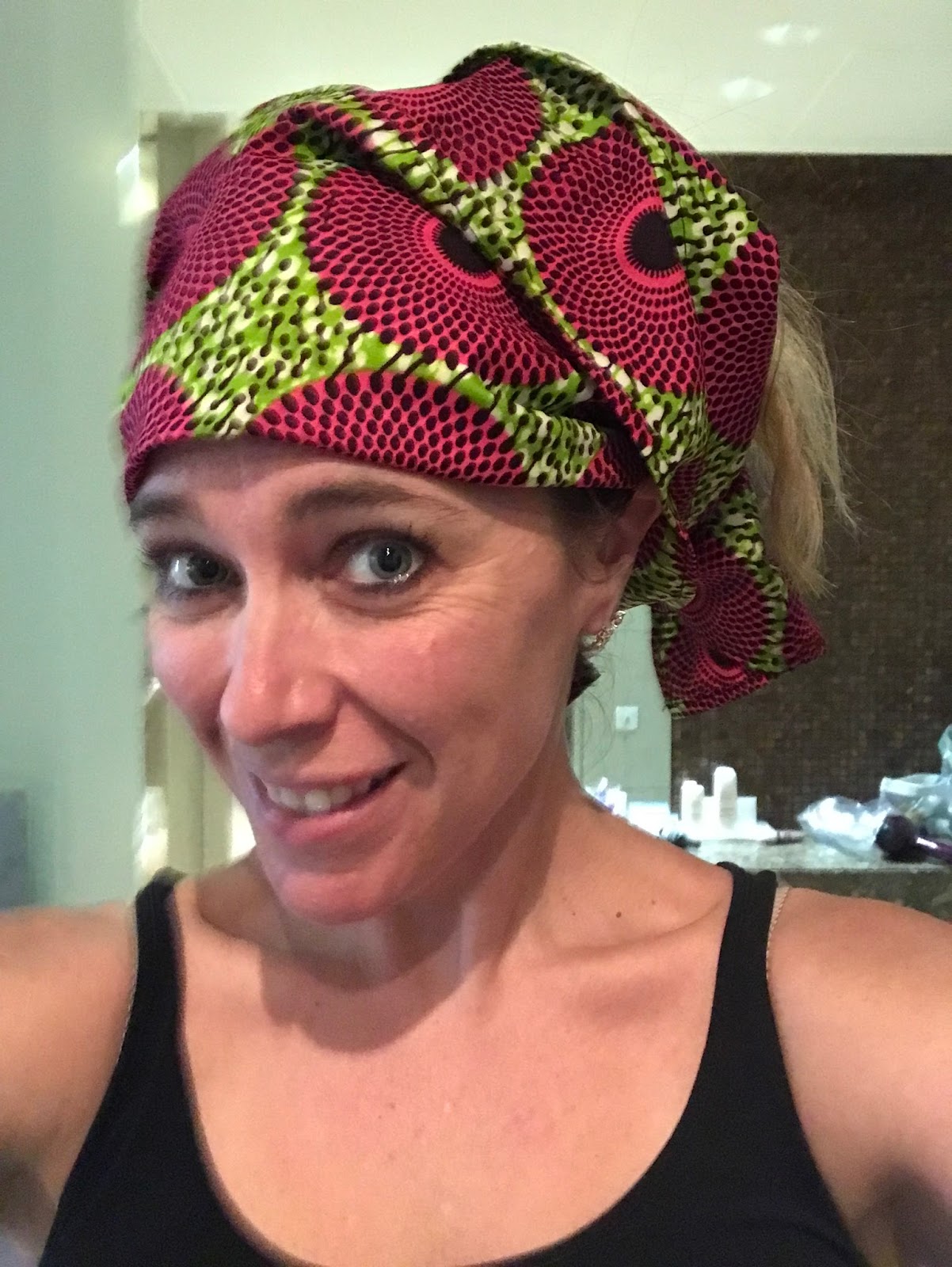
We visited a market after the school. I noticed SO MANY things. First of all, every piece of fabric in Senegal is BEAUTIFUL. I am not typically a "fabric person" (I know many people who are, I am not one) - HOWEVER - after seeing all the amazing fabric in Senegal, I think I have become one. There are so many bright colors and fun patterns. Some have gold or silver. They are ALL stunning. I found a woman who was able to take a skirt she had in the shop and alter it for me on the spot. It was too long and the waist needed to be resized - she literally did it in 5 minutes. Five minutes! I can't wait to wear it!!! I also found that many of the men's shirts (and some of the women's clothing) had a waxy type feel. The fabric has a waxy coating. Not all fabrics, but many of them.
I also had a unique experience at the market. There was a young man who I saw carrying around a cage FULL of little birds (they looked like finches). When we asked him (through broken French) what he was doing - he said we could pay him 100 CFA (about $0.16) to liberate a bird. Yep. He wasn't selling them as pets, or selling them for any other reason - just to liberate them. It took me aback. I was immediately intrigued. He wasn't begging for money. He wasn't selling chachkies. He caught and "jailed" these birds and people could pay money to free them. At $0.16 per bird - I was in. I wanted to free some of these birds. I handed him 1000 CFA (approx $1.67) to free 10 birds. He reached in and grabbed a bird and handed it to me - and I happily watched it fly away. It was an incredible feeling. I can't put it into words. It was a completely different feeling than handing someone spare change on the street. I felt drawn to the helpless birds and felt good freeing them. I'm not sure how many customers this young man has on a daily basis - but if I see another man walking with a cage of birds, I would pay money to do it again. In my head, I know he will go catch
more birds. But the $0.16 I paid per bird to release them was worth it. And I can't imagine how he goes around catching all those little tiny birds. It is definitely an experience I won't ever forget.

After we left the market (with lots of gifts in hand) - we went to NGO called Forum for African Women Educationalists (FAWE). There, we met with the president of FAWE and learned about women in African culture. Again, there is no way I could put into this BLOG all that we talked about and all that we learned today. This organization is trying to help increase the success of young African women in schools (especially in science and STEM-related fields). They try to help girls graduate from high school (and pass the BAC, the exam they have to pass to go to University). We talked about how women need to be empowered to feel like they CAN do the same things as men/boys in society and can be just as successful. FAWE has worked to provide some empowerment supports at schools by having "cells" where girls can learn and get support in many different ways.


After FAWE, we had a traditional Senegalese lunch of "chep-bu-jen" which is rice and fish at a restaraunt called Little Buddha.

Finally, after our full day - we went to Musee de la Femme Henriette Bathily- which is a museum about African women. It was originally open in 1994 on Goree Island - and is a tribute to all women. This museum encompasses all aspects of a woman's life - from rituals and rites of passage around pregnancy and birth to household duties/chores to sports and science achievements. This museum was the first of it's kind on the African continent. Now there is one other museum like this in Mali. This museum was since moved from Goree to Dakar, which is where we visited. If you are interested in learning more click here for the link. I am super tired and off to bed. Tomorrow we visit the US Embassy! I can't believe the time is flying by so quickly!


Things I Have Learned So Far

Our days have been jammed packed with learning, cultural visits and time to explore Dakar. I have learned so many things so far. Here is a quick list before I head out on today's adventures:

1. Yes, there were armed guards outside our exchange - but I was happy they were there. And - really - in the US we have armed guys who go with the armored trucks. Not that different, IMO.

2. Approx 600 CFA = $1 (lots of mental math on this trip!)

3. The average approximate beginning teacher salary is $150/month. There are three levels of teachers - that is for the beginning teacher. IT can go upwards of $400/month for higher level teachers.

4. Most teachers are men.

5. Bissap is wonderful (and even a MORE wonderful mixed half and half with Sprite) - see photo on the left

6. There are not many schools for students who would need special education services. There are about 4 schools in Senegal (for the blind or deaf) - other than that, they are not in school. Most parents keep special needs children at home.

7.The first schools in all of West Africa were in Senegal.

8. Senegal has 14 regions, each region has an academic inspector (except Dakar, which has 3 due to it's size)

9. There are exams after elementary school, middle school and high school which allow students to go on to the next level.

10. If students don't pass the BAC (after high school) they don't go to university.

11. The African Renaissance Monument is taller than the Statue of Liberty - and we were able to go all the way up into the crown (see the tiny windows in the picture below)
Off to our busy day! Will try to post more tonight!